
Many postwar back yards end at a bare slab in full sun, and a roof tied into the house gives that slab shade you can actually sit under. Serving Garland and all of Dallas County.
Call (469) 265-6259Two quick steps. We call back within one business day.
Garland’s central neighborhoods are mostly postwar homes on older lots, and many back yards still have nothing between the slab and the afternoon sun. A cover tied into the house is the simplest way to make that space usable through a Texas summer.
On a low postwar ranch, the existing eave sets the limit for everything else. We measure eave height and roof slope first, because the cover has to drain at the city’s minimum pitch and still leave headroom at the back door. Sometimes that means lifting the ceiling with a gable instead of running a flat extension. Posts come next, placed by the setback, and the overhang is planned last so the shade line lands where you sit.
See our patio cover service or explore everything we build in Garland.
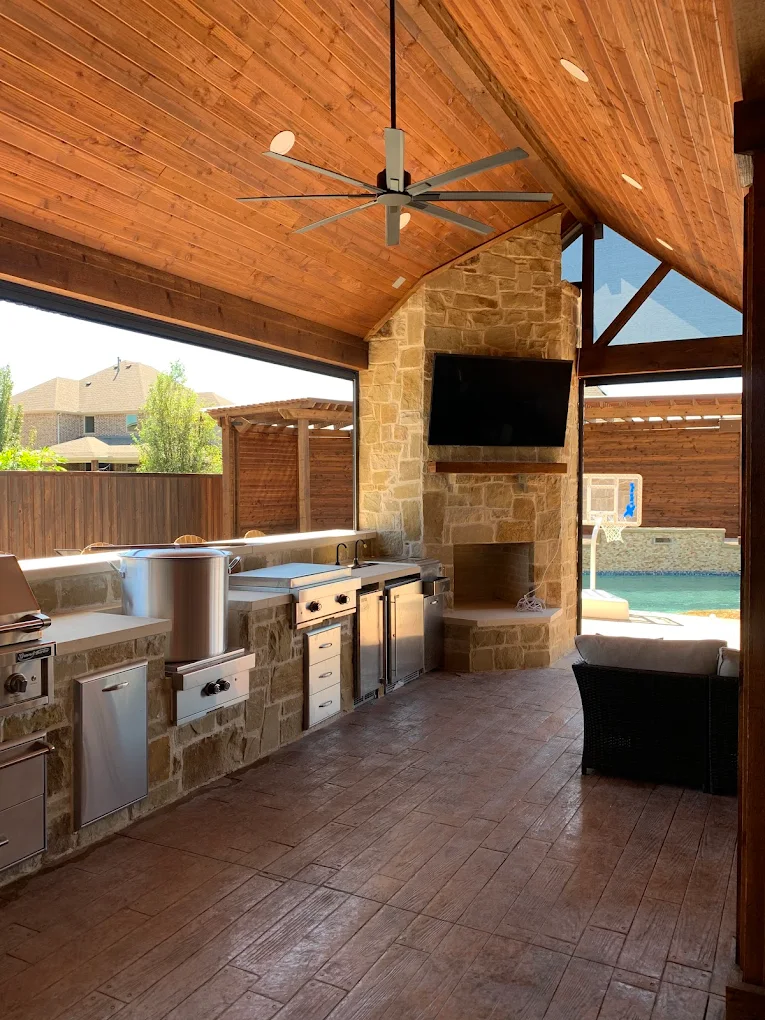
A shingled extension that drains properly while meeting a low ranch eave.
Lifts the ceiling for headroom and air movement over a small slab.
Shades a side patio or the walkway that runs along the house.
Insulated panels that block afternoon sun on a slab with no shade at all.
Some owners like to see the roof pitch and post spacing before they commit. We can model the cover against your house in 3D so you can try a different size or finish on screen.
Mention it when you book the measuring visit in Garland.
Ask about a 3D rendering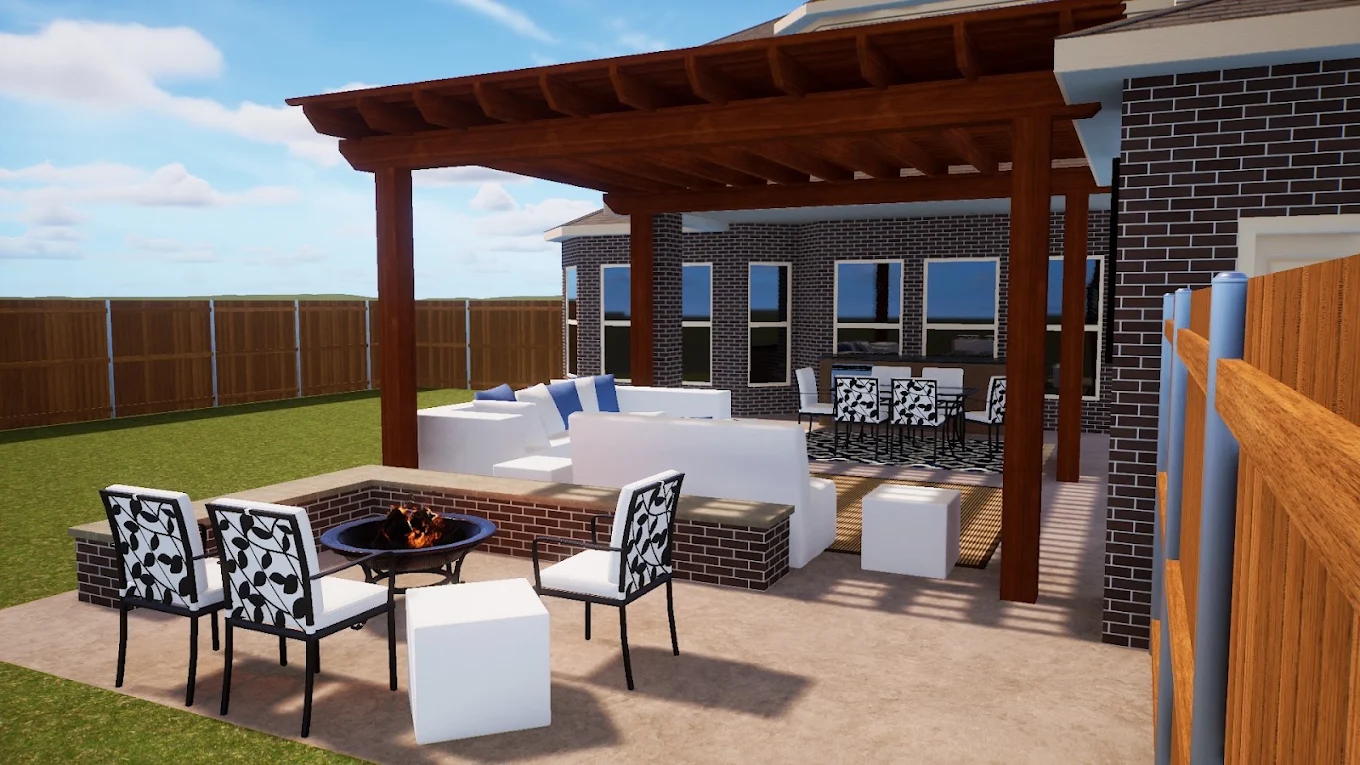
Firewheel Estates, Fairways at Firewheel, Spring Park and the Valley Creek associations off Firewheel Parkway all have HOAs, and those boards typically review exterior additions like patio covers, while many older central streets have no association at all. Garland states that it enforces city ordinances only and that following deed or HOA restrictions is up to the homeowner. Either way, Estrada matches the roof pitch, shingle or metal finish and trim color to the house and prepares the plans for the HOA submission when one is needed.
It is. Garland draws no line between covers on the house and covers out in the yard, so both go through Building Inspection. Estrada prepares the drawings and handles the filing.
We visit, measure the eave and the slab, and mark rough post spots in the yard. Then we confirm your lot’s numbers with the city, draw the cover and file the permit, which Garland wants for attached and freestanding covers alike. Building starts once the permit is approved.
Usually, yes. A cover attached at a low eave can end up with too little headroom once it has enough slope to drain. When that happens, we look at a gable or a tie-in higher on the roof. We sketch both options on site so you can compare headroom before anything is drawn.
Garland rules out corrugated panels, so it would have to be another kind. Most older homes here have shingles, and matching them is usually the cleanest look. If your house already has a metal roof, ask us. We confirm with the city what it will accept on a wood-framed cover before we draw it.
We walk your Garland yard, give you a straight price, and show you how the cover is built and tied in.